Sweet Gem Cascade: Casual Grid Puzzle Analysis & Strategies
Sweet Gem Cascade drops fruit and jewel icons onto a small grid and asks you to find groups rather than lines. Clear a group and the gap fills from above inside the same turn, which is where the whole sweet gem cascade puzzle strategy lives: you are not playing the board in front of you, you are playing the board that falls into it.
Analysed here on four things and nothing else: how a cluster is defined, how a cascade resolves, what a score multiplier tile is actually worth, and whether the board can be read one-handed on a phone.
- Grid
- 6 × 5
- Cluster minimum
- 8 icons
- Input
- Tap or drag
- Time pressure
- None
01Short answer
What makes a cascade board different from a swap board?
A swap board asks you to build a line. A cascade board asks you to find a crowd, and then keeps playing itself for as long as the crowd keeps forming.
On a classic match-three grid, a move is a trade: you exchange two neighbouring tiles and hope the result forms a row of three or more. Position is constrained by adjacency, so most of the thinking is local — what sits beside what.
A cascade board removes the line requirement entirely. Any eight matching icons that touch each other count, in whatever shape they happen to form, anywhere on the grid. Clear them and the icons above fall down to fill the hole, land against new neighbours, and can form a second qualifying group with no move spent. That second group can produce a third. The turn ends when the falling stops producing groups, not when you say so.
The consequence is that a good move on a cascade board is not the biggest group you can see. It is the group whose removal leaves the most promising arrangement above it — which is usually a group low on the grid, in a column with a lot of the same colour stacked overhead.
The score is simply a number on the results screen at the end of a stage. It resets when the next stage begins and nothing carries over, which is why these boards reward patience rather than speed.
02Mechanics
How cluster matching decides what disappears
Three rules govern every clear on the board, and once they are in your head the grid reads very differently.
- Adjacency, not alignmentIcons count as one cluster when they touch edge to edge. A diagonal contact does not join two groups. This is why an L, a T or a ragged blob of eight all clear, while eight of the same colour scattered in a checkerboard do not.
- The threshold is a floor, not a targetEight is the minimum. A cluster of fourteen clears as one event and scores more, but the real gain is the fourteen-cell hole it leaves, which pulls down almost three full rows of new icons.
- Refill comes from above, in the same columnsIcons never slide sideways. Whatever falls into a gap comes from the top of that same column, so the column you empty is the column you are effectively rerolling. Empty two adjacent columns and the chance of a follow-on group climbs sharply.
- Score multiplier tiles apply to the stage, not the moveWhen a multiplier icon is cleared it is banked and applied to the stage total at the end. Clearing it early costs nothing and clearing it late gains nothing; what matters is clearing it at all, because a multiplier left on the board when the stage ends is simply lost.
- Colour count is fixed per stageBoards that use five icon types produce clusters far more readily than boards that use seven. If a stage suddenly feels dry, count the distinct icons before you blame your own play.
03Sequence
How a single turn resolves
Understanding the order of events is most of the strategy, because everything after your tap is deterministic apart from the new icons.
You select a qualifying cluster. It is removed and scored. Gravity is applied per column: every icon above a gap moves down by the number of gaps beneath it. New icons enter at the top of each affected column. The board is then re-scanned for qualifying clusters, and any it finds are cleared automatically. Gravity applies again. The loop repeats until a scan finds nothing.
Two things follow from that loop. First, the length of a cascade is not luck in the way it feels — the deeper and narrower the hole you make, the more icons are forced to move, and moving icons are the only ones that can form new groups. A wide, shallow clear across the top row disturbs almost nothing.
Second, you cannot interrupt a cascade, so there is no skill in reacting quickly. The entire decision is made before the tap. Players who feel rushed on these boards are usually rushing themselves; the grid will wait indefinitely.
04Overview
The board at a glance
| Element | Detail | What it changes for the player |
|---|---|---|
| Genre | Casual cluster-match puzzle | No reflex demand; the board waits for the move |
| Grid size | 6 columns by 5 rows | Whole board readable at once on a phone screen |
| Cluster rule | 8 or more touching icons | Shape stops mattering, density starts mattering |
| Controls | One-touch tap or drag | Playable one-handed, standing up |
| Age rating | Everyone 3+ | No content gate; the board is the entire game |
| Session length | Roughly two to five minutes per stage | Fits a queue; nothing is lost by closing the app |
Figures describe the cascade format analysed on this page. Grid size, rating and control scheme vary between individual apps and are stated on each app’s own store listing.
05Questions
Questions players ask
What happens when no qualifying cluster is left on the board?
The grid reshuffles itself. A cluster board can reach a state where no eight touching icons share a colour anywhere, and rather than end the stage the game redistributes the same icons into a new arrangement. It costs no move. It is also a signal worth reading: a board that reshuffles twice in quick succession is running too many colours for its size, and the stage will be won on patience rather than on any clever sequence.
Does a longer cascade need a bigger starting cluster?
Not directly. What drives a long cascade is how many icons are forced to move, and that is a function of depth rather than width. Eight icons stacked in two columns disturb more of the board than eleven spread across the top row.
Can these boards be played without an internet connection?
Cluster puzzles are computed on the device, so the core loop generally works offline. Leaderboards, cloud saves and any promotional content will not. Whether a particular app supports offline play is stated on its store listing, and that listing is the only reliable source.
Is there an advantage to playing quickly?
Only where a stage runs a visible timer, which is uncommon in this format. On a standard board nothing changes while you look at it, so spending twenty seconds locating the deepest cluster is free and usually worth more than three fast taps.
Why does a stage suddenly feel impossible after a smooth run?
Almost always because the icon count went up. A board that used five colours and now uses seven produces far fewer qualifying groups from the same arrangement. Count the distinct icons at the start of a stage; it explains most difficulty spikes.
06Practice
Five things to try in your next session
- Before your first tap, name the two colours with the most icons on screen. Play one of them and ignore the other for the whole board.
- Take a cluster of eight in the bottom two rows over a cluster of twelve in the top two, twice in a row, and compare the cascades that follow.
- Deliberately clear two clusters in the same pair of columns back to back, and watch how much of the grid rerolls.
- Play one stage without clearing any multiplier tile, then replay it clearing every one you can reach. The difference in the end total is the honest measure of what they are worth.
- Play one board with the sound off. Cascade audio is designed to feel rewarding regardless of whether the move was good, and removing it makes the grid easier to read.
None of these need a purchase, an account or a connection. They need one stage each.
07On paper
Something to keep beside the phone
The pages here are free and will stay free. What a web page cannot do is sit next to your hand while a board is open, and that gap is the only reason the sheet exists.
The Cascade Sheet
Twelve pages, folded to fit a jacket pocket, built around the one thing that decides a cluster board: how many icon colours are in play and where the hole you leave is going to be.
- A colour-count table — five, six and seven icon types — against how often a qualifying cluster appears, with the arithmetic shown rather than asserted.
- Depth against width, drawn: the same eight icons cleared in two columns and in one row, and what falls in each case.
- The reshuffle tell, and what a board reshuffling twice in a row is telling you about the stage rather than about your play.
- Multiplier timing on one page, ending the question of whether banking one early costs anything.
- Five drills, one board each, with space to write what happened.
Order it by email Terms of the order
This is one item sold by a private individual, not a storefront. No checkout exists on this domain, no payment page and no card details are collected anywhere on it: you write, Sarah Tremblay answers with transfer details, and the file follows once the transfer lands. No sales tax is added and no invoice from a registered business is issued. If it does not arrive, or arrives and will not open, say so and the money goes back in full.
08Store
Finding a cascade board on Google Play
Cluster and cascade mechanics turn up across a lot of casual titles, and the store listing is where the current facts about any of them live — the labels below are taken from it rather than from us. This site downloads nothing and installs nothing; the link opens Google Play.

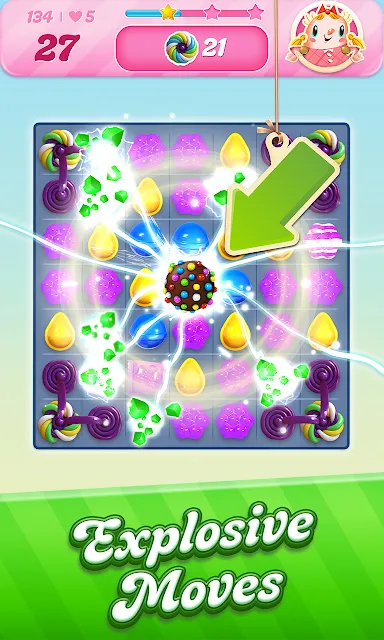
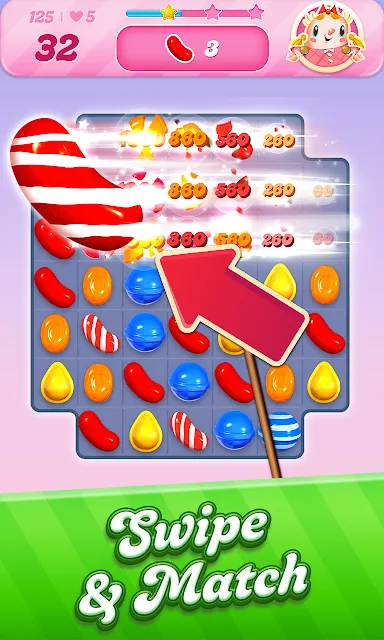
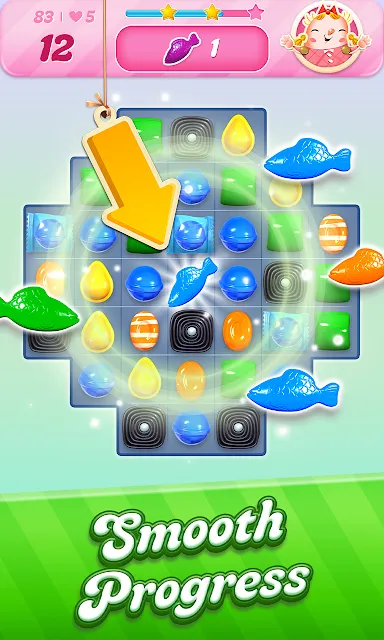
Candy Crush Saga, by King
Open the listing on Google Play
Price, taxes and any fees are shown on Google Play at the next step. Developers change listings without notice, so the date above is a statement about when this was read, not about the app.
Write to us
[email protected]Email is the only way to reach this site. There are no forms and no data collection anywhere on it — write in, and the reply goes back to the address you used and nowhere else.